
Pillar 2 introduced a 15% minimum effective tax framework for large multinational groups, generally above €750 million in consolidated revenue. This overview considers the rules and implementation assumptions discussed in 2024. Safe harbours also affect the calculation. Ivan Matus and Daniil Shmitt, a student of the School of Troubleshooters, explain how the framework affects tax calculations and reporting.

Fig. 1. Illustration for the authors’ overview
General provisions
In 2024, a number of jurisdictions began applying Pillar 2 rules in domestic law. The framework seeks to reduce incentives to shift profits to low-tax jurisdictions. Adoption dates and the qualified status of national rules must be assessed separately.
The rules cover multinational enterprise (MNE) groups with consolidated revenue from €750M per year, regardless of the availability of consolidated accounts, in at least two of the previous four annual periods.
Where a jurisdictional effective tax rate is below 15%, a top-up tax may arise under the GloBE rules. Its base and collection depend on exclusions, safe harbours and the applicable domestic top-up tax, IIR and UTPR; the ultimate parent does not invariably collect or pay the entire difference.
Three methods of taxation work together:
- The Income Inclusion Rule (IIR) generally charges a parent entity with its allocable share of top-up tax on low-taxed constituent entities. A top-down approach applies, subject to the model rules. It is not simply a 15% tax on all group revenue.
- The Undertaxed Profits Rule (UTPR) is a backstop for top-up tax not collected under a qualified IIR. Implementing jurisdictions allocate it under the model rules and apply a deduction denial or equivalent adjustment. It is not ordinary withholding tax on payments.
- The Qualified Domestic Minimum Top-up Tax (QDMTT) is a local tax paid additionally. The country where a participant is registered introduces the same approach to taxing profit within the statutory rate of 15% in order to keep the money in its own budget.
The effective rate of a jurisdiction is measured against the same threshold of 15%:
Jurisdictional ETR = Taxes taken into account ÷ Net GloBE Income of the jurisdiction
When the rate drops below the threshold, the jurisdictional top-up tax is assessed on top:
Jurisdictional Top-up Tax = Excess Profit × Top-up Tax Percentage – QDMTT
Here the excess profit is the net GloBE income of the jurisdiction less the substance-based income exclusion (SBIE), the top-up tax percentage is 15% minus the ETR, and the QDMTT is the qualified domestic top-up tax already paid in the country of the participant.
Timing of the introduction
The calendar differs from country to country, and the difference decides who collects the additional tax and in which budget it stays:

Fig. 2. Timeframes for entry into force of Pillar 2 legislation in a number of jurisdictions
- Isle of Man, Guernsey and Jersey plan to implement the IIR from 01.01.25.
- In the 2024 planning scenario, the UAE was expected to introduce additional Pillar 2 measures from 2025. An expected IIR was an assumption, not an enacted rule: the UAE subsequently introduced a domestic minimum top-up tax from 2025 without implementing an IIR at that stage.
- Cyprus considered a bill on applying Pillar 2 to tax periods starting from 01.01.24.
- The Russian Federation named the introduction of the QDMTT as possible in the main directions of tax policy for 2024–2026, but official sources disclose no specific plans.
A national rule must meet the OECD’s qualification criteria to receive the corresponding treatment under the GloBE framework. Giving a domestic tax a Pillar 2 label does not, by itself, make it a qualified domestic minimum top-up tax.
Qualified status affects the order in which taxes are collected and eligibility for the QDMTT safe harbour. It should be distinguished from separate agreements for exchanging GloBE information returns. The status of a domestic rule does not automatically decide every safe harbour or information-exchange question.
A negative effect in the form of an additional tax may occur for Russian companies with a foreign presence if they use losses or benefits in Russia that bring the ETR below 15%. The money is then collected not in Russia but in the budget of the country where the parent or the sub-holding company sits, and the relief meant to support the business turns into a payment abroad. Two examples below show how the calendar works and who ends up collecting the difference.
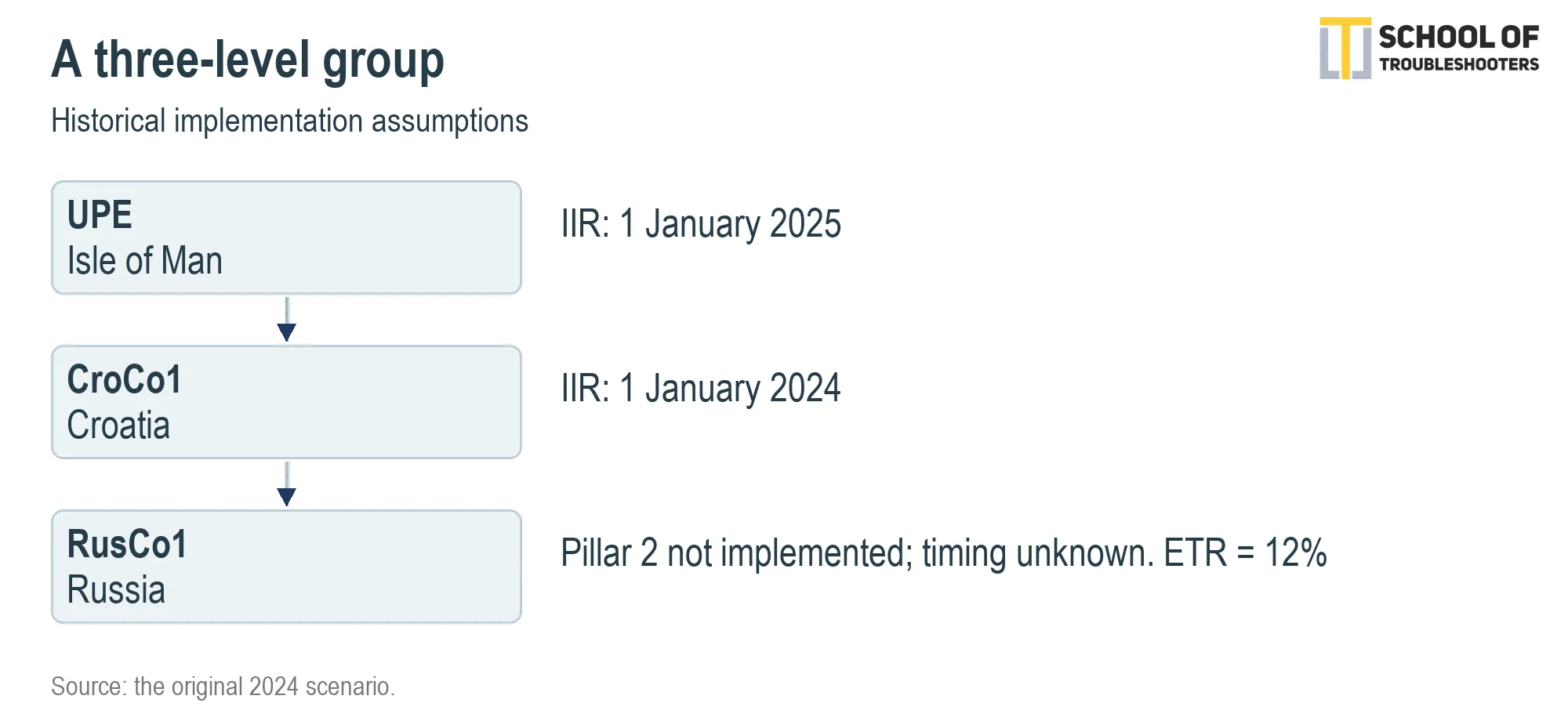
Fig. 3. A group with the ultimate parent on the Isle of Man and controlled companies in Croatia and Russia
The estimation goes from the top down, jurisdiction by jurisdiction:
- Determine whether Pillar 2 has been introduced where the UPE is registered. On the Isle of Man the IIR starts from 01.01.25 only.
- Go down the structure. The sub-holding CroCo1 sits in Croatia, where the IIR was introduced from 01.01.24, while for RusCo1 in Russia Pillar 2 has not been introduced at all.
- Split the conclusion by year. For 2024 CroCo1 assesses and pays the top-up tax in Croatia, because the ETR of the subsidiary is below 15%: the Russian company carries losses of previous years or holds a preferential IT rate. For 2025 the top-up tax for RusCo1 is calculated and paid at the level of the UPE, into the budget of the Isle of Man.
The second example places the ultimate parent in the Russian Federation, where the date of introduction is still unknown.
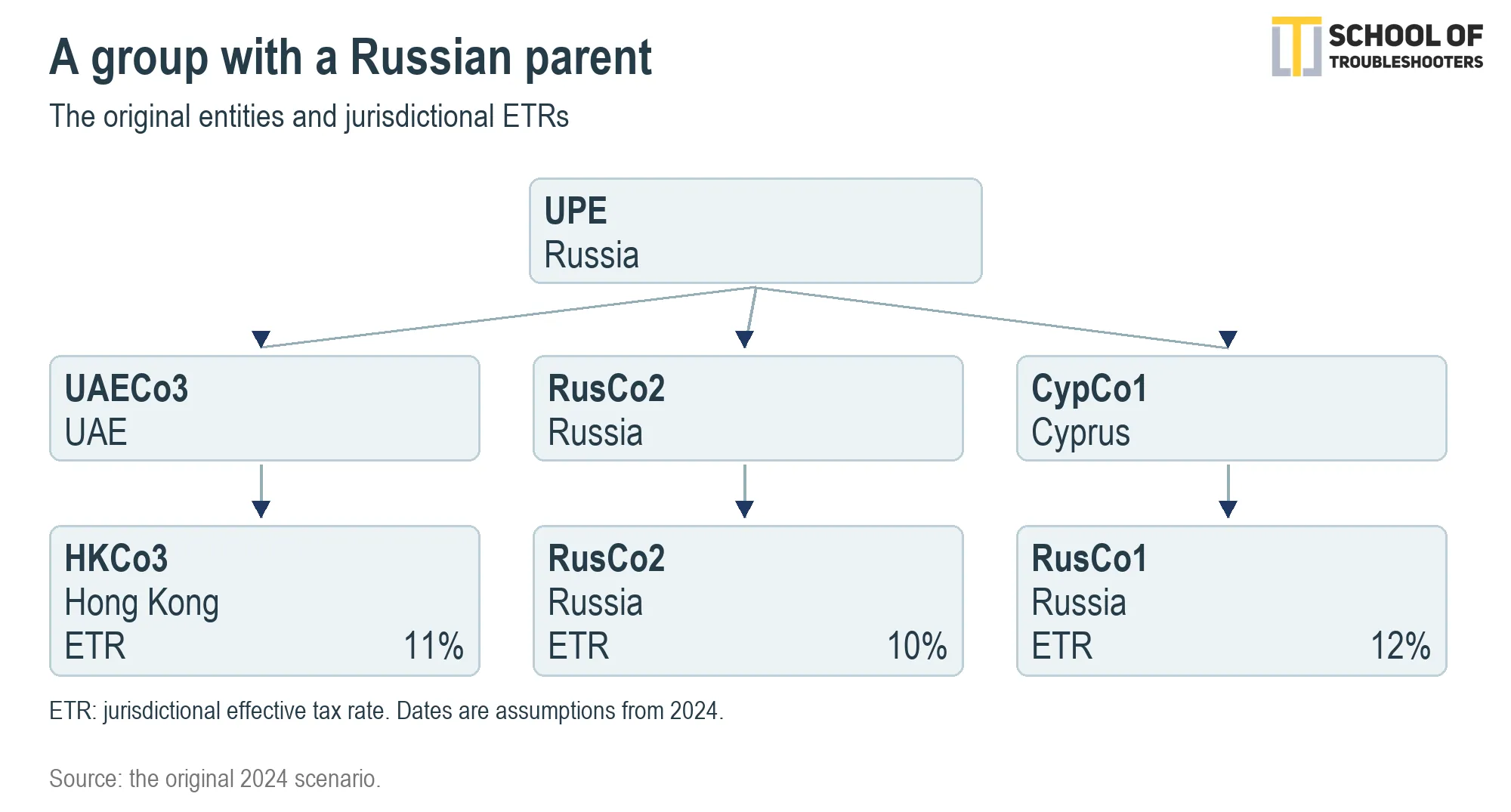
Fig. 4. A group with the ultimate parent in the Russian Federation
The second example is a 2024 planning scenario. It assumes implementation in Hong Kong, the UAE and Cyprus on the dates shown. Each payment below also depends on the ownership chain, applicable rules, exclusions and safe harbours; it is not a statement that the UAE enacted all three mechanisms.
- for 2024 UAECo3 does not pay the additional tax for HKCo3 even though the ETR of the subsidiary is 11%: Pillar 2 starts in the UAE and Hong Kong only from 01.01.25, and the UTPR rules do not apply in 2024 in the UAE, Hong Kong or Cyprus
- for 2025, assuming the Hong Kong QDMTT applies, HKCo3 pays the domestic top-up tax; 15% minus its 11% ETR gives a 4 percentage-point top-up rate before the substance-based exclusion and other adjustments
- for 2025, Cyprus may collect an allocated UTPR amount relating to RusCo2 if the top-up tax is not otherwise collected under the applicable rules
- for 2024 and 2025 CypCo1 pays the additional tax in Cyprus for RusCo1 with an ETR below 15%
- for 2024 and 2025 the top-up tax at the level of the ultimate parent in Russia is not assessed.
Disclosure in the consolidated statements
When legislation is enacted or substantively enacted but not yet effective, an entity discloses known or reasonably estimable information about its exposure. Where this cannot be estimated, it states that fact and describes progress in assessing the exposure.
An entity applies the temporary exception to recognising and disclosing Pillar 2 deferred tax assets and liabilities, and discloses that it has applied it. When the rules are effective, it separately discloses current tax expense or income related to Pillar 2. The exception is not an optional waiver of all tax disclosure.
Take a group whose ultimate parent is located on the Isle of Man, where the legislation was adopted in 2024 but comes into effect on 01.01.25. The consolidated statements then disclose:
- for 2024 the inclusion of the UPE in the scope of Pillar 2, the application of the exception in terms of deferred taxes, and a qualitative and quantitative assessment of the impact or a list of measures taken to calculate the effect
- for 2025 the current income tax under Pillar 2 and the application of the exception that removes the need to calculate deferred taxes.
Reporting
The return and the financial statements serve different disclosure purposes.
The GloBE information return gathers everything the tax authorities need to check the assessment:
- the assessment of the effective rate and of the additional tax, including the applicability of the IIR, UTPR and QDMTT rules;
- the details of the entities of the group that pay the tax and file the return;
- whether safe harbours or other reliefs are used;
- the accounting standards applied;
- the structure of the group.

Fig. 5. Illustration for the authors’ overview
The return is submitted by the ultimate parent or by each designated participant on behalf of the group, provided the jurisdiction of its registration exchanges information automatically with the tax authorities of the countries where the group is present.
Deadlines shorten with practice: for the first tax period the return is due 18 months after the reporting period, for the second 15 months. For the Isle of Man, where Pillar 2 starts on 01.01.25, the return for 2025 is due by 30.06.27 and the return for 2026 by 31.03.28.
Penalties depend on the jurisdiction, the filing obligation and the type of breach. The working comparison cited maxima of €10,000 in Cyprus, €100,000 in Italy and €900,000 in the Netherlands; these figures require checking against the relevant law and period before use.
Nuances of the assessment
Three questions decide the size of the payment. The first is the clarification of the participants of the group: the structure determines who pays the tax and who files the declaration. The second is the determination of the possibilities for using safe harbours to soften the negative effect.
The third is the qualified domestic top-up tax. Certain countries introduce their own QDMTT to prevent the tax base from shifting outside their jurisdiction, and the component is taken into account when calculating the tax payable on the rest of the group.
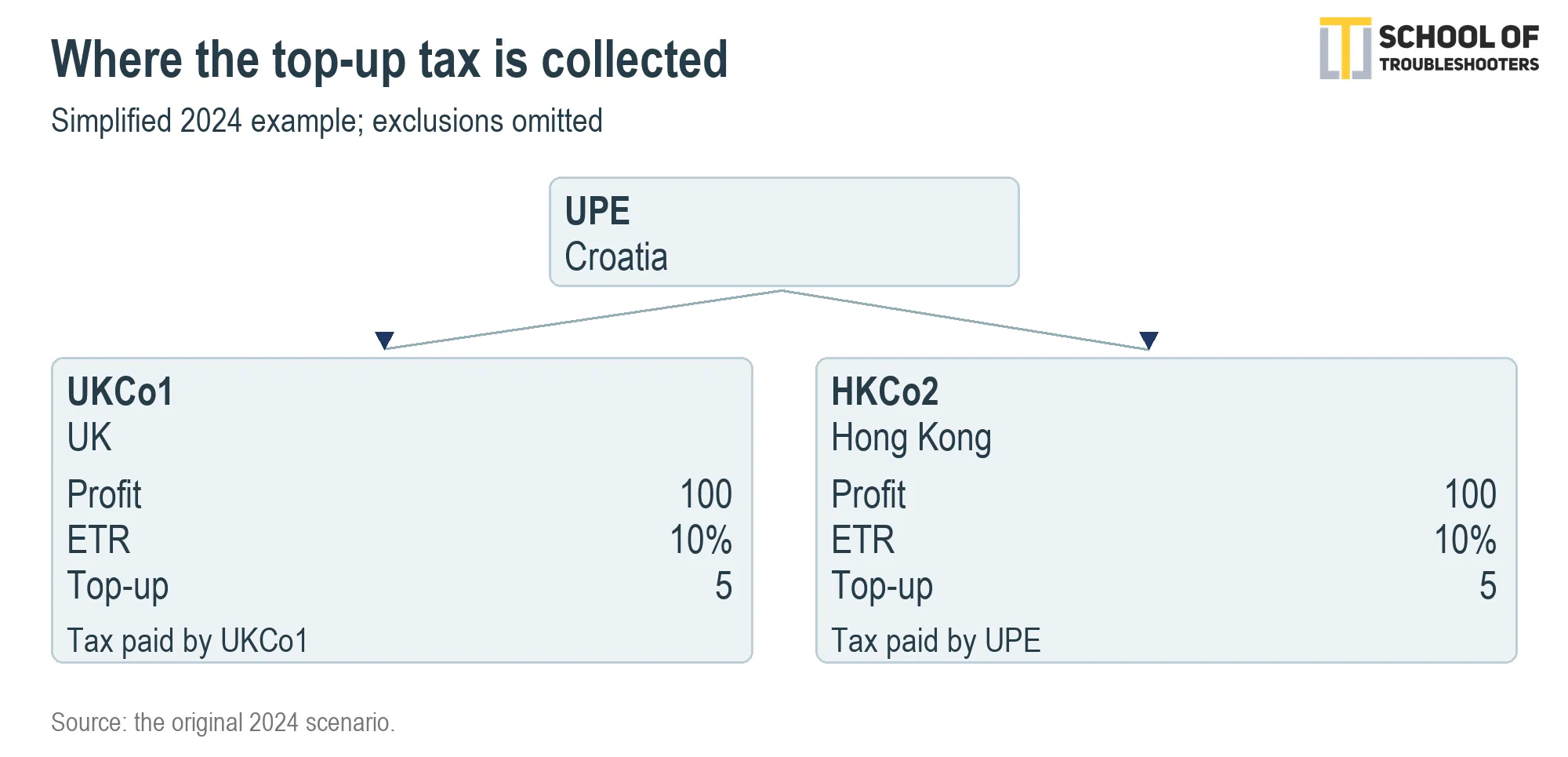
Fig. 6. How the qualified domestic minimum top-up tax works in 2024
In the example Pillar 2 was introduced in the jurisdiction of the ultimate parent, Croatia, on 01.01.24. UKCo1 in the United Kingdom incurs a surcharge of $5, since its ETR is below 15% and the QDMTT is introduced there in 2024. HKCo2 in Hong Kong incurs the same surcharge of $5, but the charge is levied at the level of the ultimate parent: the QDMTT starts in Hong Kong only on 01.01.25, while the IIR rule comes into force in Croatia from 01.01.24.
Removal of the normal profit from the base
The substance-based income exclusion takes the routine return on people and assets out of the base:
Excess Profit = Net GloBE Income – Eligible Payroll × Payroll Rate – Eligible Tangible Assets × Asset Rate
SAL stands for the personnel costs accepted for the calculation: salaries and bonuses of employees, fees in favour of social funds, and payments under civil-law contracts if the contractors take part in the core business processes of the company.
FA denotes eligible tangible assets, including qualifying rights of use, rather than all fixed assets or licences. The transitional percentages depend on the fiscal year: 10% of payroll and 8% of assets apply for 2023, and 9.8% and 7.8% for 2024. They decline to 5% after the transition.
Uncertainty about a date is itself a number in the budget.

Fig. 7. From group scope to top-up tax
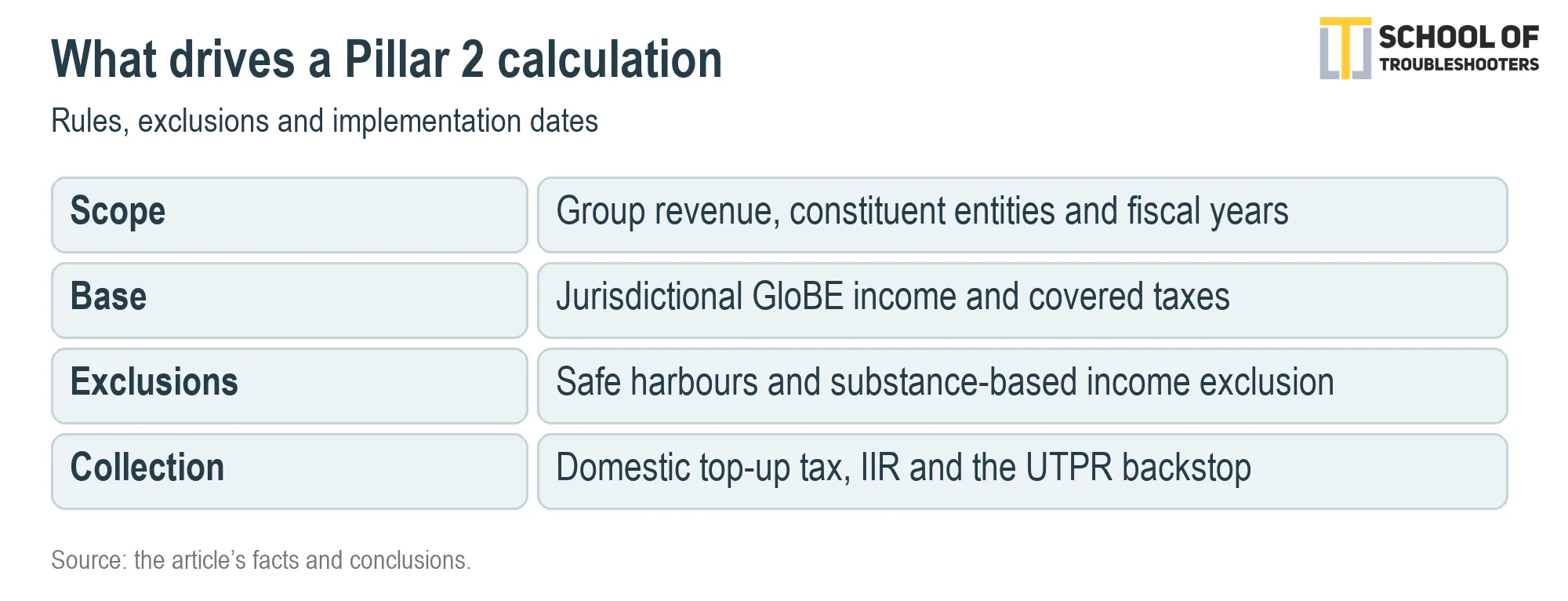
Fig. 8. What drives a Pillar 2 calculation
What to Remember?
- the calendar decides the budget: the same group pays in Croatia for 2024 and on the Isle of Man for 2025;
- three mechanisms work together – IIR, UTPR and QDMTT – while a fourth, the STTR, stands apart;
- the rules reach groups with consolidated revenue from €750M in two of the previous four years;
- check qualified status and safe-harbour conditions separately from filing arrangements;
- the substance-based exclusion shrinks: both rates fall to 5% over a ten-year transition.
Pillar 2 can increase a group’s total tax burden and change which jurisdiction collects it. A reliable forecast needs both a calculation of the base and a country-by-country implementation calendar.